
The Treadmere Care Guide
How to Wash Trainers in the Washing Machine Without Ruining Them
Plenty of everyday trainers are fine in the machine, as long as the label agrees. When a pair comes out worse, the cause is almost always the way it was washed. This is the method that gets them clean and keeps them in shape.
Cleaning trainers with a brush and a bowl of soapy water takes a whole evening, and the grime in the stitching usually survives it. A washing machine gets into those places without effort, which is exactly why people try it. It is also why so many pairs come back out warped, faded or still grubby.
What separates a good result from a bad one is not chance. It is four decisions: what the care label says, the temperature, the programme, and whether anything protects the shoe while the drum turns.
Make those four decisions well and the machine becomes one of the best ways to clean a pair of trainers. Here is how to make them.
Can trainers go in the washing machine?
Often, yes. Canvas pumps, knit and mesh running shoes, everyday fabric trainers and most children's shoes are made from materials that cope happily with a cool, gentle wash.
Some pairs should stay out, and this is worth a moment. Leather, suede, and trainers held together with delicate glued trims usually want cleaning by hand, and many makers say so plainly on the label.
That makes the first step a check rather than a technique. Look at the label inside the tongue, or at the maker's care instructions, before a shoe goes anywhere near the drum. If it says not to machine wash, that settles it for that pair.
The mistakes that actually do the damage
When a pair of trainers comes out of the machine ruined, the cause is nearly always on this short list.
Letting them tumble loose
With nothing around them, trainers hit the drum again and again for the whole cycle. That is a common reason for lost shape and tired seams, and it is the thud you can hear from the next room.
Washing too hot
Heat softens the glues that hold a trainer together. A cool wash cleans them properly and is far kinder to the construction.
Picking a harsh programme
A fierce spin throws a shoe about harder than any pavement ever will. Gentle and delicate programmes exist for items exactly like these.
Cramming the drum
An overloaded machine stops everything moving freely, so the clean is patchier and the shoes take more knocks.
Reaching for strong products
Bleach and heavy-duty detergents can strip colour and leave the upper feeling dry and brittle. A small measure of mild detergent is all a pair of trainers needs.
Drying them on direct heat
Radiators, tumble dryers and sunny sills can stiffen and shrink a shoe that survived the wash perfectly. Drying is where good washes most often go wrong.
Every one of these has an easy fix. Put the fixes together and you have the method below.
How to wash trainers safely, step by step
Read the care label
Begin here every time. If the maker says the shoe is not suitable for the machine, wash it by hand. If there is no label at all, treat leather, suede and anything delicate as hand-wash only.
Clear off loose dirt, laces and insoles
Knock the soles together outside and brush away dried mud. Pull out the laces to wash on their own, and lift out any insoles that come free. Grit does the scratching, and it is far easier to remove while dry.
Put each trainer in a padded wash bag
This is the step most people leave out, and it decides how the shoes come back. A padded wash bag sits between the trainer and the drum for the whole cycle and stays zipped while it does. One shoe to a bag gives each trainer room and protection.
Wash cool on a gentle programme
Choose 30°C, a small measure of mild detergent and the lowest spin your machine offers. Leave out the fabric conditioner and leave out the bleach.
Reshape and let them air‑dry
Fill each shoe loosely with plain paper so it holds its shape, then leave the pair somewhere airy and away from direct heat. It takes longer than you would like, and it is worth the wait.
Steps three to five
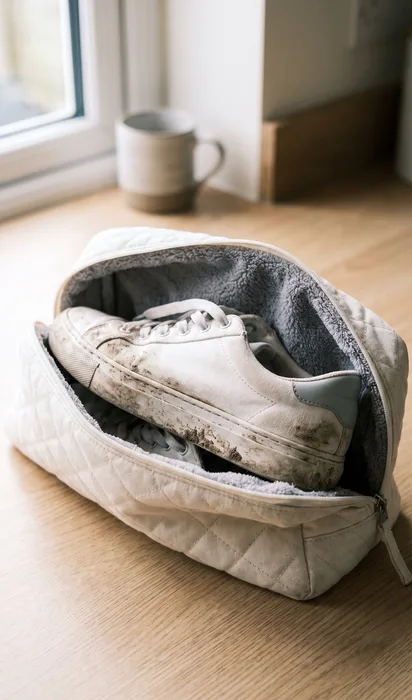
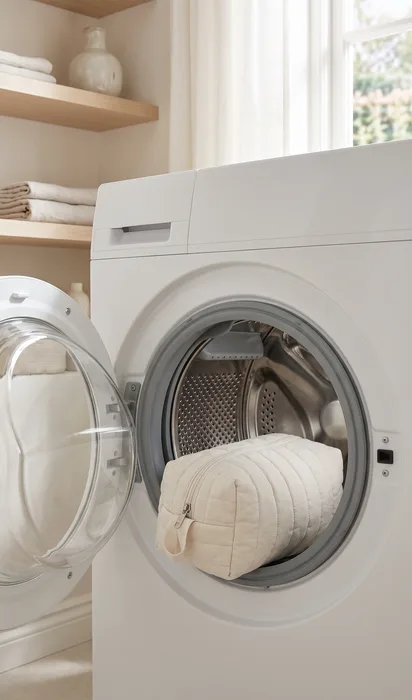
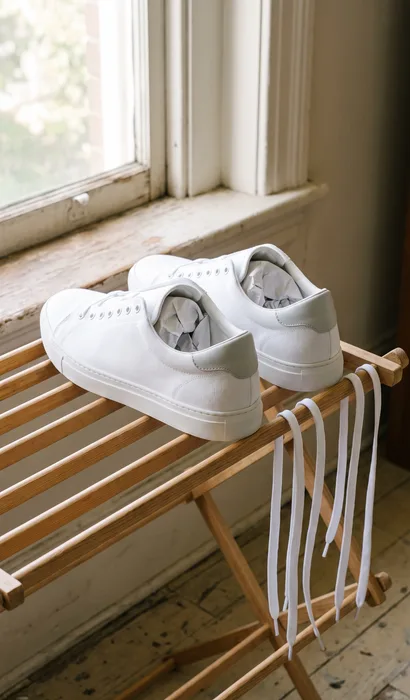
Why a trainer wash bag makes the difference
Four of the five steps are choices you make before pressing start. The wash bag is the only one still working once the drum is turning.
A bag designed for trainers does four jobs at the same time:
It cushions the shoe
Padded walls take the knocks that would otherwise land on the trainer itself.
It quietens the wash
Far less thudding against the drum, so the machine sounds like a machine again.
It helps hold the shape
The trainer is held snugly instead of being flung around loose.
It cleans where brushes miss
The lining touches the whole shoe for the full cycle, including the creases and seams that are fiddly to scrub.
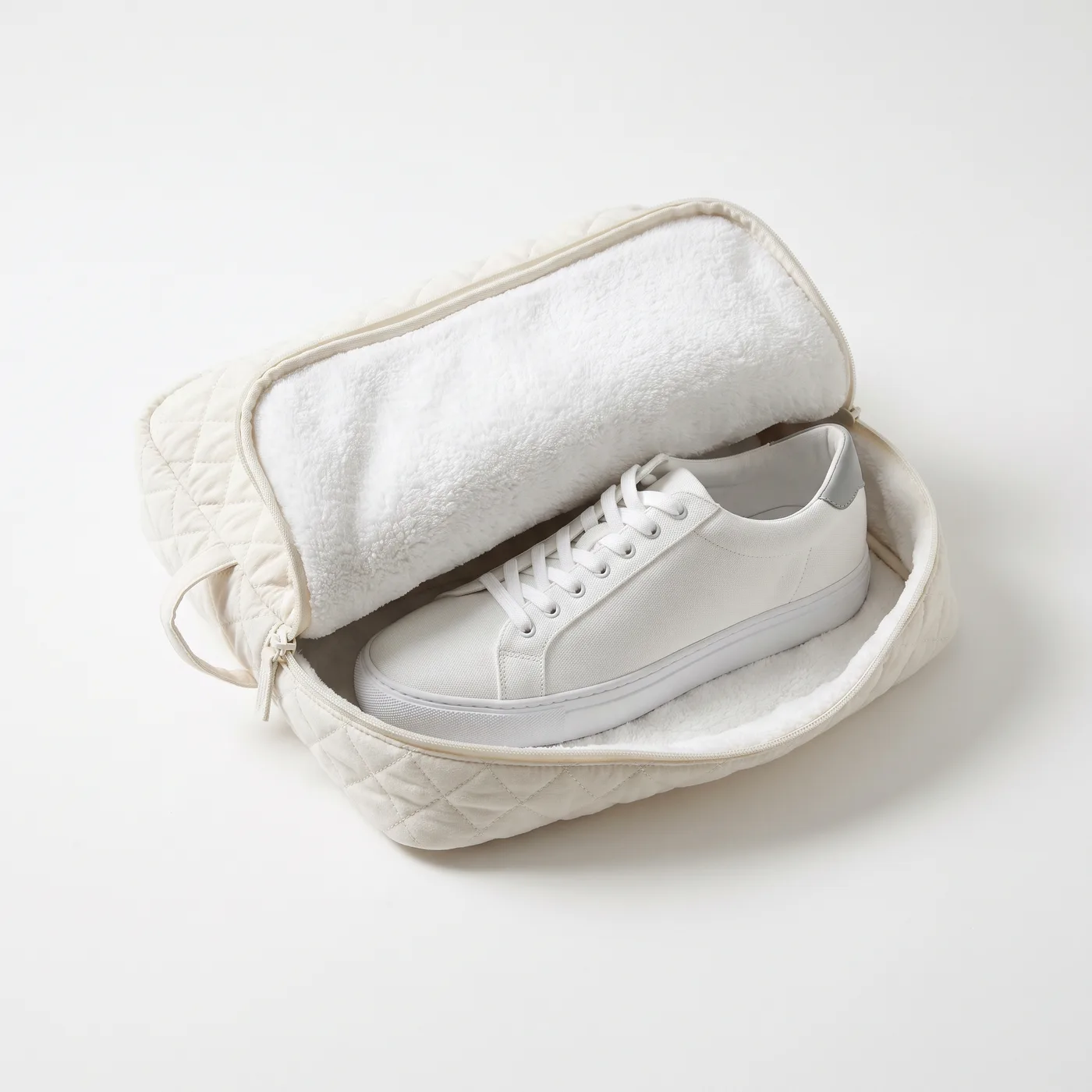
That fourth job is where the Treadmere bag is built differently. Its inside is lined with dense, soft microfibre that stays against the trainer through the whole wash and lifts dirt gently instead of scouring it. The quilted outer wall absorbs the knocks at the same time. A plain mesh laundry bag does neither.
It is the same wash you were planning to run. The bag is what sits between your trainers and the drum while it happens.
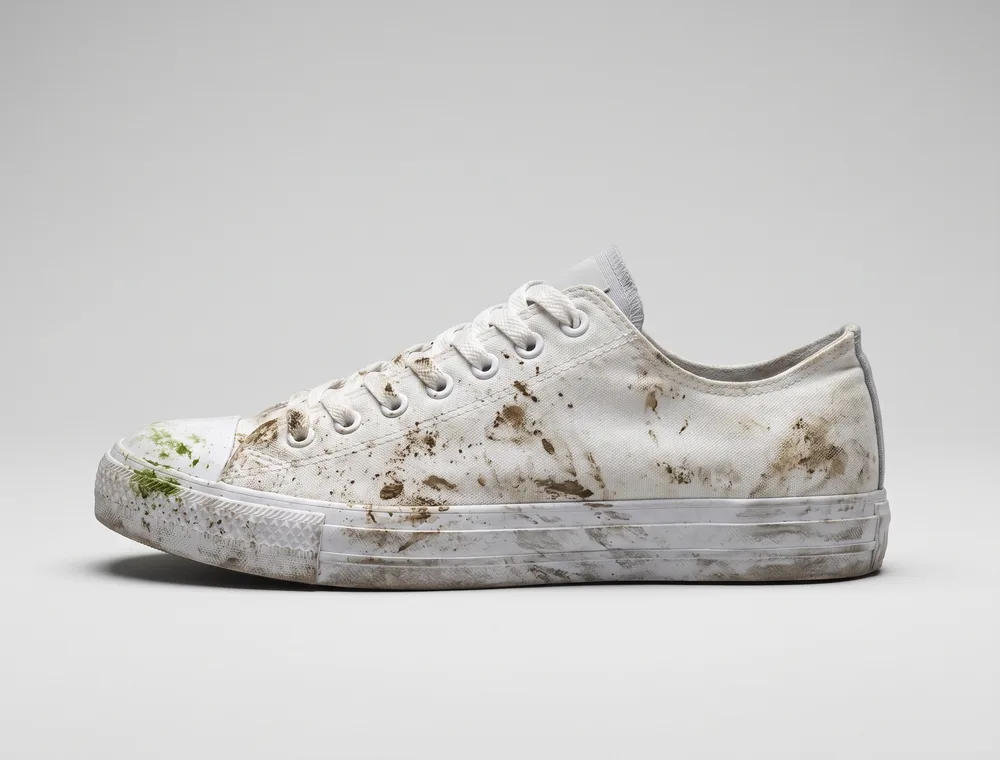
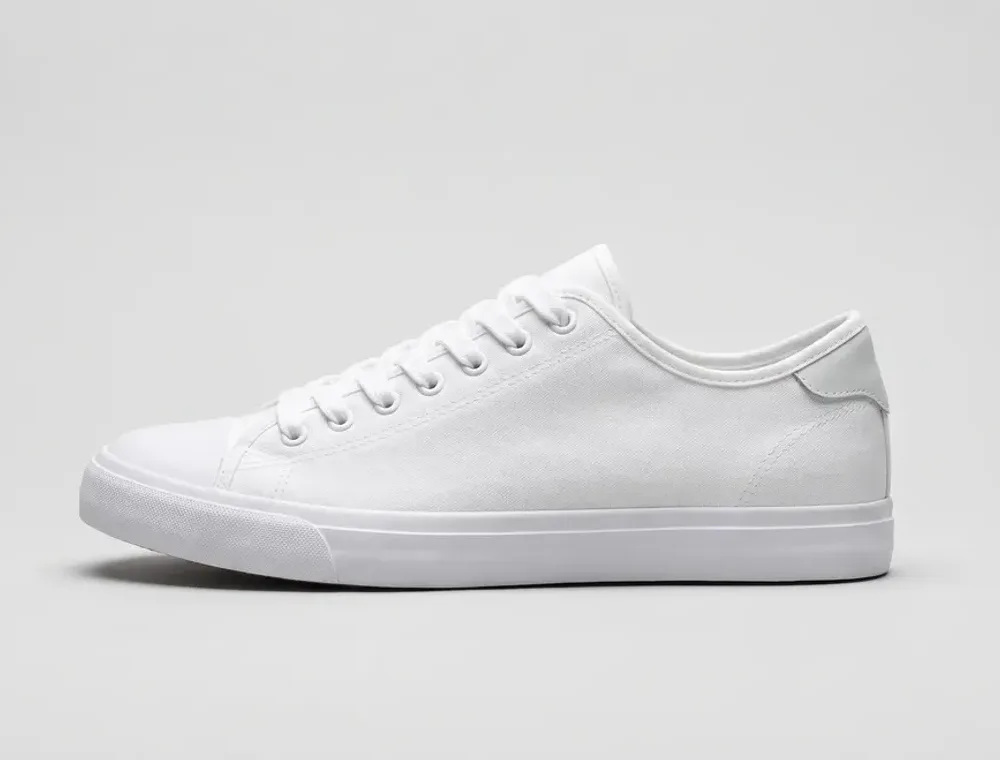
The same trainer, one wash apart
Drag the handle to compare the shoe before and after a cool wash in the bag.
The easier way to keep trainers clean
Most people who end up with a trainer wash bag have already tried the workarounds.
- Scrubbing by hand
- Slow, messy work that still leaves the mesh looking dull.
- A towel in the drum
- Softens a little of the noise but does nothing for the shoe's shape.
- An old pillowcase
- Rips at the seams, and gives no cushioning whatsoever.
- A standard laundry bag
- Keeps the pair together, and that is about all it contributes.
A bag made for trainers is a different thing altogether. The question to ask of any wash bag is whether it cushions the shoe or simply contains it. Here is what the Treadmere bag is built to do:
- A soft microfibre lining that reaches the whole surface of the shoe
- A quilted, padded wall between the trainer and the drum
- A quieter wash with far less knocking
- A sturdy zip and a simple, reusable design
- Suited to many trainers, running shoes, casual shoes and children's shoes
- One shoe to a bag for the best protection and the most even clean
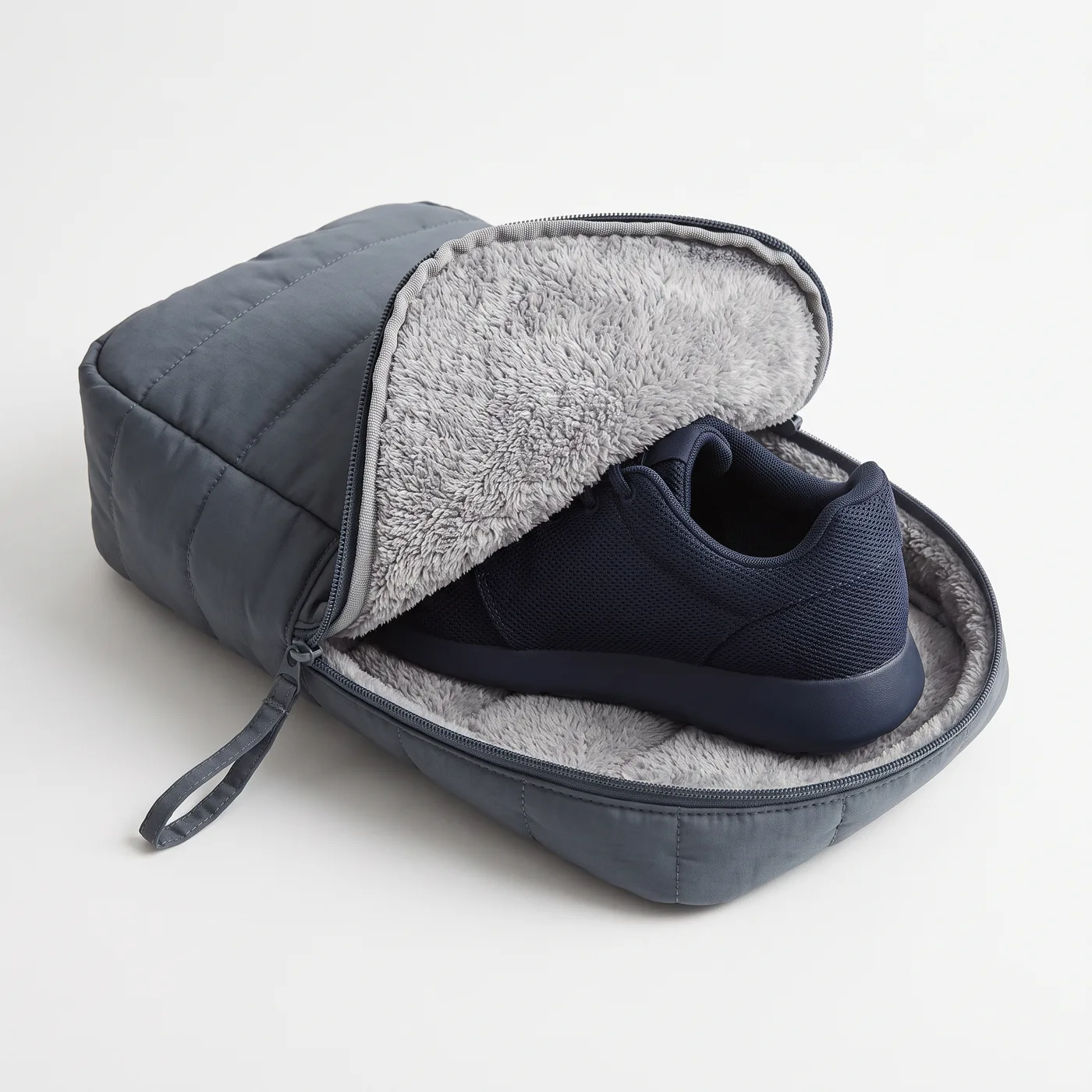
The bag comes in two colourways for a practical reason. Chalk is for white and pale shoes. Slate is for dark shoes and for any colours that might run. Both are made to be used again and again: shake out the grit after a wash and the bag is ready for the next pair.
Every order ships with free tracked UK delivery and easy returns.
What people notice after the first wash
My white running shoes live on muddy towpaths, and washing them loose never really shifted the grime. In the bag they come out properly bright, and they still feel like my shoes afterwards.
The thing I noticed first was the silence. No more banging from the utility room at ten at night. The kids' school trainers look respectable again too.
Simple and it does what it says. The shoes come out clean, they keep their shape, and the bag goes straight back in the drawer.
I was nervous about putting canvas pumps in the machine. Checked the label, used the cool setting, bagged them one each. The easiest clean they have ever had.
Illustrative reviews written for this demonstration.
The Treadmere Trainer Wash Bag
Pick the colourway for your trainers
A padded, microfibre-lined wash bag with a full zip. One shoe per bag, so most people start with a pair of bags.
- Free tracked UK delivery
- Easy returns
- Reusable wash after wash
Washing trainers well comes down to four decisions
Whether a pair comes out looking better or worse is settled before the cycle begins. The temperature you pick. The programme you pick. How you dry them. And whether anything is protecting the shoe while the drum turns.
Get those right and the washing machine stops being a gamble and becomes a dependable way to keep trainers looking the way they should.
Find a simpler way to wash your trainers, and help them keep their shape.
Wash trainers the gentler way